
Guide · Aug 15, 2026
How Intermittent Fasting Works: Insulin, Fat Burning and Calories
A clear, jargon-free guide to how intermittent fasting changes fuel use and hormone rhythms—insulin, AMPK, mTOR, and growth hormone—what actually breaks a…
By the Ping Diet editorial team · Last updated
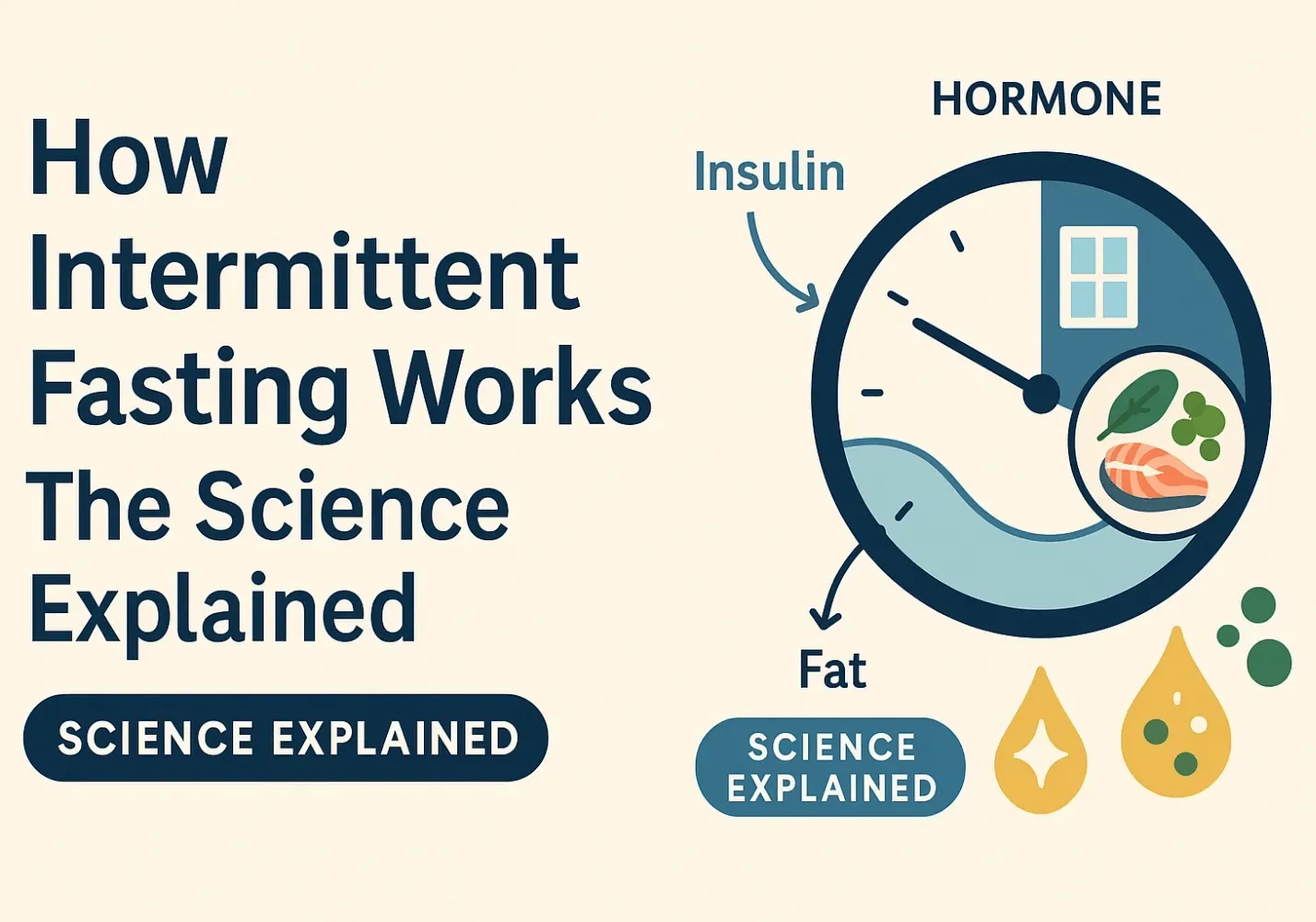
So… how does intermittent fasting actually work?
You’ve seen the before-and-afters and the hype. But under the hood, what’s really happening when you shorten your eating window? The short version: fasting changes your body’s fuel choice and hormone rhythm so fat burning becomes easier—and hunger gets quieter.
Let’s break the science down without the jargon and show you how to make it work in real life.
The fat-burning switch: insulin down, access to stored fuel up
Every time you eat, insulin rises to help move glucose into cells. That’s normal. But if insulin stays high all day from constant snacking, your body keeps choosing incoming calories over stored fat.
- In a fast: insulin drifts down → your body regains access to stored fat (lipolysis).
- Glycogen first, then fat: you’ll burn through liver glycogen before leaning more on fat and—later—ketones.
- Appetite hormones adapt: ghrelin (the “I’m hungry” signal) comes in predictable waves that shrink with consistency.
What happens across a typical fast
- 0–4 hours after a meal: you’re in the “fed” state; insulin is higher; glucose is the main fuel.
- 4–12 hours: insulin falls; liver glycogen starts covering energy needs.
- 12–18+ hours: fat oxidation and ketone production rise; many people notice steady energy and fewer cravings.
“Fasting doesn’t force your body to do something unnatural—it simply gives it time to use the fuel you already stored.”
Key pathways: AMPK, mTOR, growth hormone (and why you should care)
- AMPK up: during a fast, AMPK signals cells to use stored fuel efficiently.
- mTOR down (temporarily): this nudges your body toward maintenance/cleanup rather than constant building.
- Growth hormone pulses: can rise during fasting and exercise, supporting fat mobilization and muscle preservation when protein needs are met in your window.
Translation? With a smart re-feed (protein first), you can support muscle while improving fat use.
Frequently asked questions
Does intermittent fasting slow my metabolism?
Short, repeatable fasting windows such as 14:10 or 16:8 generally do not slow metabolism. Very low calories over long periods can, which is why fasting is paired with protein-forward meals and strength training.
What happens to my body after 12 hours of fasting?
Insulin drops, the body finishes using liver glycogen, and fat oxidation and ketone production begin to rise. Many people notice steadier energy and fewer cravings between 12–18 hours.
What actually breaks a fast?
Calories from sugar, milk or creamers, juice, and snacks break a fast. Water, black coffee, plain tea, and zero-calorie electrolytes are usually fine. Sweeteners are a gray area—test your personal response.
Is an earlier eating window better for results?
For many people yes. Finishing meals earlier (for example 10am–6pm) can support insulin sensitivity, digestion, and sleep quality, making fasting easier to sustain.
What should my first meal look like after the fast?
Go protein first—about 25–40 g—plus fiber and healthy fats to steady appetite and blood sugar. Examples include eggs with avocado and greens, Greek yogurt with berries and nuts, or salmon with vegetables.