
Guide · Aug 15, 2026
Combining Fasting and Calorie Cycling for Fat Loss
A practical guide to pairing time-restricted eating with calorie cycling for sustainable fat loss.
By the Ping Diet editorial team · Last updated
Why “fasting + calorie cycling” matters right now
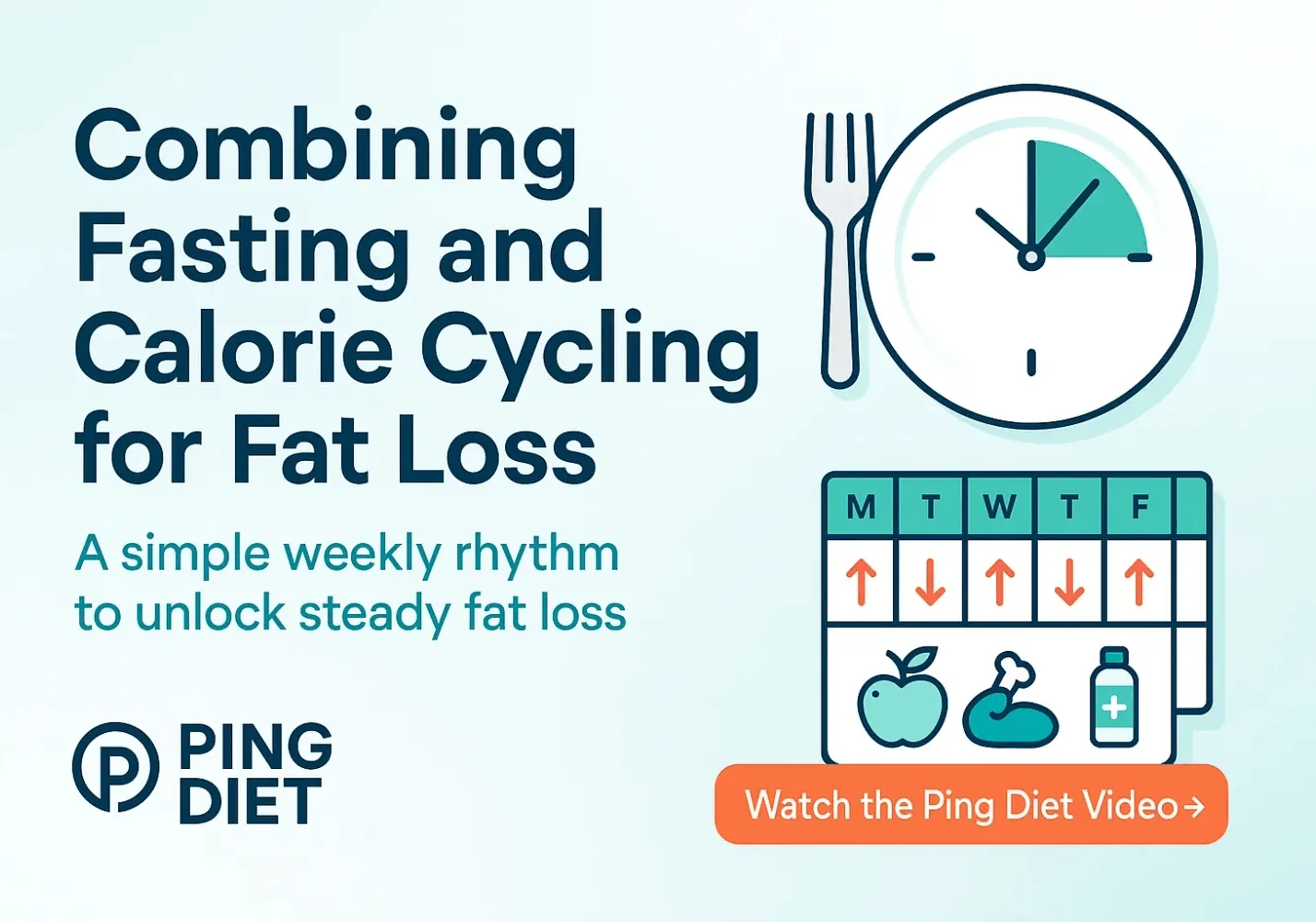
If you’ve been consistent with intermittent fasting but your progress slowed—or you’re brand new and want quick, sustainable wins—pairing time-restricted eating with calorie cycling can give you structure and flexibility. Instead of eating the exact same number of calories every day, you’ll rotate higher- and lower-intake days inside your eating window. That keeps hunger under control, preserves energy for busy days and workouts, and helps your metabolism stay responsive.
Think of it as a weekly rhythm: some days you refuel more, some days you coast lighter—all within a simple fasting window. The Ping Diet approach focuses on one daily decision (your window), protein-first meals, and smart hydration/electrolytes so the plan fits a real life, not a perfect one.
“Consistency creates momentum; smart variety keeps momentum from stalling.”
Core concept explained simply
Intermittent fasting (the “when”)
With time-restricted eating, you choose a daily window (for example, 12pm–8pm) and keep your meals inside it. Fewer eating occasions means fewer insulin spikes, better hunger control, and a clear routine. Popular windows: 12:12 → 14:10 → 16:8 as you adapt.
Calorie cycling (the “how much”)
Instead of the same intake daily, you alternate re-feed (higher-calorie) and cut (lower-calorie) days across the week. This helps preserve training performance and satisfaction without needing perfection every day. The weekly average still lands in a gentle deficit.
Why combine them?
- Hunger control: Fasting creates a predictable rhythm; cycling gives you “pressure-release” days so you don’t feel boxed in.
- Metabolic flexibility: The body gets better at switching between stored fat and dietary fuel.
- Adherence: Big wins come from plans you can repeat. This combo is simple enough for weekdays and forgiving enough for weekends.
Step-by-step: how to start (12:12 → 14:10 → 16:8)
Week 0–1: Set your window
- Days 1–3: Run 12:12 (e.g., 8am–8pm). Just practice closing the kitchen on time.
- Days 4–7: Shift to 14:10 (e.g., 10am–8pm). Note hunger waves—they’re normal and pass.
Week 2: Move to 16:8
- Try 16:8 (e.g., 12pm–8pm). If evenings are your weak spot, test an early window like 10am–6pm for better sleep and fewer night cravings.
- Set two alarms: window opens and last bite. This tiny habit boosts consistency fast.
Week 3+: Layer in calorie cycling
Keep your 16:8 window steady. Now toggle intake using a simple scale:
- Re-feed day: ~maintenance calories, focus on carbs around training.
- Cut day: ~maintenance minus 300–500 kcal, prioritize protein/veg.
Rule of thumb: if you don’t track calories, use a plate method on cut days (½ veg, ¼ protein, ¼ smart carbs + 1–2 thumbs fat) and slightly larger portions on re-feed days. The weekly average is what matters.
Hunger & energy support (hydration, electrolytes, movement)
Hydration targets
- Morning: 12–20 oz water on waking.
- Daily total: ~2–3 L (adjust for heat or activity).
Electrolytes keep the fast calm
Low sodium, potassium, or magnesium can masquerade as “hunger.” Use a zero-calorie electrolyte mix or a pinch of salt in water during the fast—especially on cut days. Black coffee and plain tea are fine for most people.
Move (light) during the fast; train (harder) in the window
- Daily steps: aim for 7k–10k. Walking blunts cravings and steadies energy.
- Strength 2–3×/week: push, pull, hinge, squat, carry. Put these sessions on re-feed days for better performance.
- Easy cardio: 15–30 minutes low-to-moderate intensity is a secret appetite tamer.
What to eat when the window opens (protein-first)
Lead with 25–40 g protein
Protein first blunts the urge to snack-graze and supports muscle while losing fat. Add fiber and healthy fats; place most carbs earlier in the window or around training (especially on re-feed days).
Simple protein-first combinations
- Eggs + avocado + greens (add salsa or feta).
- Greek yogurt (2%–5%) + berries + chopped nuts + chia.
- Chicken or tofu bowl with quinoa/rice, roasted veg, tahini-lemon drizzle.
- Salmon + veggies with olive oil and herbs; potato or beans on re-feed days.
Tip: On cut days, build volume with vegetables and lean proteins. On re-feed days, add slow carbs (potatoes, beans, fruit, whole grains) and slightly larger portions—especially near training.
Common mistakes & fixes
Mistake 1: Window drift
16:8 turns into 15:9, then late-night bites sneak in.
Fix: Two alarms; brush teeth after “last bite.” Earlier windows often help sleep and stop snacking.
Mistake 2: Breaking the fast with sugar bombs
You spike, crash, and crave.
Fix: Protein-first, then color (veg/fruit), then smart carbs. Keep dessert for the final meal on re-feed days.
Mistake 3: Same intake every day
Energy and progress stall.
Fix: Cycle 2–3 re-feed days each week to support training and adherence; keep the weekly average in a modest deficit.
Mistake 4: Low electrolytes, high “hunger”
Fix: Zero-calorie electrolytes during the fast; a pinch of salt in water crushes fake hunger for many people.
Mistake 5: All cardio, no strength
Fix: Two short full-body lifts per week protect shape and resting burn.
Sample 7-day plan: combining fasting and calorie cycling
Assume a 16:8 window (12pm–8pm). Adjust times as needed. On re-feed days, eat to satisfied within your window; on cut days, use the “½ veg, ¼ protein, ¼ carbs” plate with 1–2 thumbs of fat.
- Mon — Cut (16:8, earlier last bite if possible) Break-fast: Greek yogurt + berries + walnuts (protein-first). Dinner: Chicken thigh, big salad, roasted zucchini. Steps: 8k. Electrolytes AM.
- Tue — Re-feed (16:8) Strength session mid-window. Add carbs: quinoa or potatoes at both meals. Protein 30–40 g each meal.
- Wed — Cut Break-fast: Eggs + avocado + salsa + greens. Dinner: Salmon + broccoli + olive oil. 20–30 min easy walk after dinner.
- Thu — Re-feed Training day. Add fruit at break-fast and beans or rice at dinner. Stop eating by 8pm.
- Fri — Cut (early window 10am–6pm if evenings trigger snacking) Protein-forward meals; limit starchy carbs. Family/social? Keep portions small, savor slowly.
- Sat — Re-feed (flex window for social plans) Enjoy slow carbs with protein and veg. If dessert, place at the end of the final meal.
- Sun — Cut or optional 24-hour reset If you choose a reset (e.g., lunch-to-lunch), use electrolytes and light movement only; resume normal window Monday.
Weekly checkpoint: Track three things—energy, cravings, and waist. If evenings are tough, shift the window earlier. If workouts drag, place a re-feed the day before or the day of training.
Real people, real results
- “Switching to an early 16:8 and adding two re-feeds stopped my 3-week stall in five days.”
- “Protein-first + electrolytes = steady mornings. I finally feel in control.”
- “Two 30-minute lifts a week on re-feed days made my clothes fit better even before the scale moved.”
Your Next Step
Ready to see how the Ping Diet makes fasting effortless? Watch the step-by-step method real people use to quiet hunger and lose weight—without complicated rules.
👀 **Watch the Ping Diet Video now.
General information only. Not medical advice. Don’t fast if pregnant, breastfeeding, under 18, underweight, or with a history of eating disorders. Consult your clinician.
Combining Fasting and Calorie Cycling for Fat Loss — FAQs
Do I have to count calories to calorie-cycle with intermittent fasting?
No. You can estimate with a plate method. On cut days, build half your plate with vegetables, a quarter with lean protein, a quarter with slow carbs, plus 1–2 thumbs healthy fat. On re-feed days, slightly increase carbs and portions—especially around workouts.
How many re-feed days per week should I use?
Most beginners do well with 2–3 re-feed days (often Tue/Thu/Sat). Keep your window the same. If energy or training suffers, add one re-feed; if fat loss stalls for two weeks, consider one fewer.
Will an earlier eating window help with cravings and sleep?
For many people, yes. An early 16:8 like 10am–6pm reduces late-night snacking and improves sleep quality. Try it for 7–10 days and track energy, cravings, and waist.
What breaks a fast while I’m cycling calories?
Calories do. Water, black coffee, plain tea, and zero-calorie electrolytes are typically fine in the fast. Sugar, milk, creamers, and snacks break it. Save calories for your window.
How long until I notice results?
Most people feel steadier energy and fewer cravings in 1–2 weeks. With consistent windows, protein-first meals, and 2–3 re-feeds weekly, visible fat-loss momentum often shows in 2–4 weeks.
Frequently asked questions
How do I combine intermittent fasting with calorie cycling?
Keep a consistent fasting window such as 16:8, then alternate higher-intake re-feed days with lower-intake cut days. Place most carbs earlier in the window or around workouts on re-feed days; emphasize protein, vegetables, and fiber on cut days.
How many re-feed days should I have each week?
Most beginners do well with 2–3 re-feed days per week to support training and adherence. If energy is low or workouts suffer, add one; if fat loss stalls for two weeks, try one fewer.
Do I need to count calories to calorie-cycle?
No. You can use simple portion guides. On cut days, build half the plate with vegetables, a quarter with lean protein, and a quarter with slow carbs plus a small amount of healthy fats. On re-feed days, increase portions—especially carbs—within your eating window.
What breaks a fast while I’m calorie cycling?
Calories do. Water, black coffee, plain tea, and zero-calorie electrolytes are generally fine during the fast. Sugar, milk, creamers, and snacks add calories and typically break the fast.
Is an earlier eating window better for sleep and cravings?
For many people, yes. Finishing dinner earlier with an early 16:8 window (e.g., 10am–6pm) can reduce late-night snacking and support better sleep quality.